
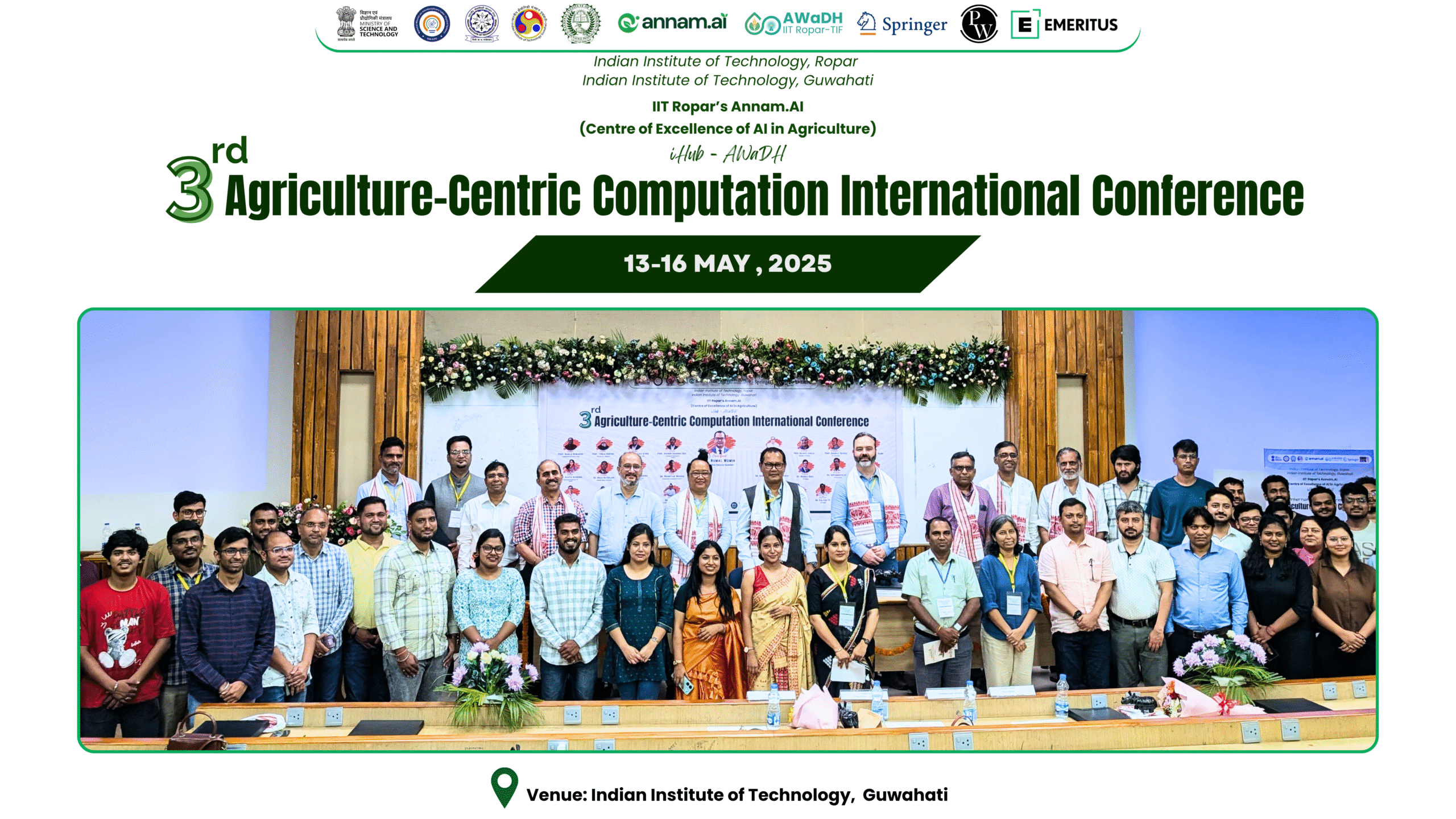
3𝐫𝐝 𝐈𝐧𝐭𝐞𝐫𝐧𝐚𝐭𝐢𝐨𝐧𝐚𝐥 𝐂𝐨𝐧𝐟𝐞𝐫𝐞𝐧𝐜𝐞 𝐨𝐧 𝐀𝐠𝐫𝐢𝐜𝐮𝐥𝐭𝐮𝐫𝐞-𝐂𝐞𝐧𝐭𝐫𝐢𝐜 𝐂𝐨𝐦𝐩𝐮𝐭𝐚𝐭𝐢𝐨𝐧 (𝐈𝐂𝐀 2025) at Indian Institute of Technology, Guwahati brought together a powerful synergy of minds—from seasoned researchers to emerging innovators— all driven by a shared mission: to redefine agriculture through computation and deep tech.
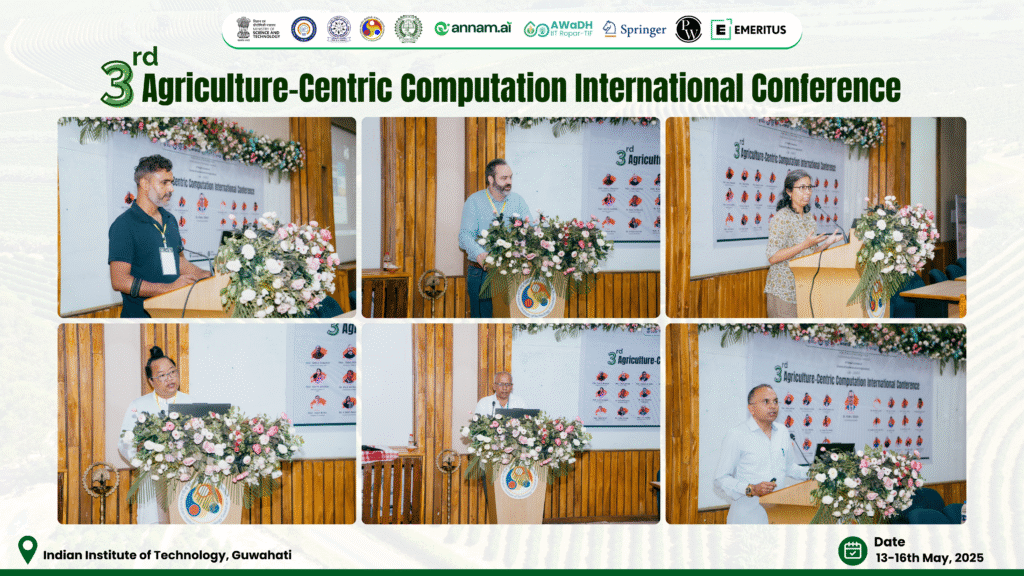
The conference begin with two exceptional keynote sessions: Prof. Tomás Norton (KU Leuven) explored the role of computational models in revolutionizing precision agriculture and smart farming systems. Prof. Danilo Demarchi (Politecnico di Torino) spoke about the fusion of electronics, AI, and IoT in enabling scalable, high-impact agricultural solutions. This energy carried forward into our first technical session, chaired by 𝐃𝐫. 𝐒𝐰𝐚𝐭𝐢 𝐒𝐡𝐮𝐤𝐥𝐚 (VIT-AP) and 𝐃𝐫. 𝐀𝐧𝐚𝐦𝐢𝐤𝐚 𝐘𝐚𝐝𝐚𝐯 (IIT Guwahati). Researchers presented breakthrough work—from disease detection in rice and pearl millet to federated learning for crop security, and hyperspectral imaging using advanced optimization algorithms. Each project reflected the spirit of ICA—technology for transformation.
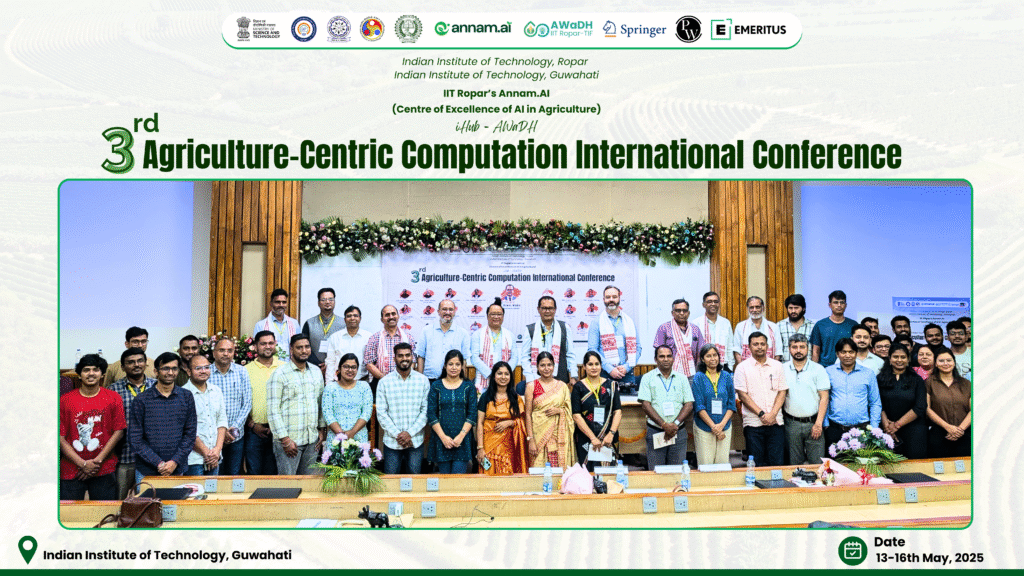
Session 2, chaired by Prof. Ram Prakash Sharma (NIT Arunachal Pradesh Official), featured innovative ideas like robotic arms for vertical farming, drone swarm technologies, energy-efficient aerial spraying, and farmer-centric studies from Punjab to Europe. As the sun began to set, we shifted gears with a virtual talk by Prof. Bala Natarajan (Kansas State University), and an engaging panel discussion titled “𝐅𝐫𝐨𝐦 𝐋𝐚𝐛 𝐭𝐨 𝐋𝐚𝐧𝐝”. Experts and practitioners shared real-world challenges and the roadmap to scaling innovations that matter. The day ended with deeper conversations, new collaborations, and a shared commitment to shaping a better #agricultural #future. ICA isn’t just a conference — it’s a movement. A drive to 𝐢𝐧𝐧𝐨𝐯𝐚𝐭𝐞, 𝐜𝐨𝐧𝐧𝐞𝐜𝐭, 𝐚𝐧𝐝 𝐜𝐫𝐞𝐚𝐭𝐞 𝐭𝐚𝐧𝐠𝐢𝐛𝐥𝐞 𝐢𝐦𝐩𝐚𝐜𝐭 𝐟𝐫𝐨𝐦 𝐭𝐡𝐞 𝐥𝐚𝐛 𝐭𝐨 𝐭𝐡𝐞 𝐥𝐚𝐧𝐝.
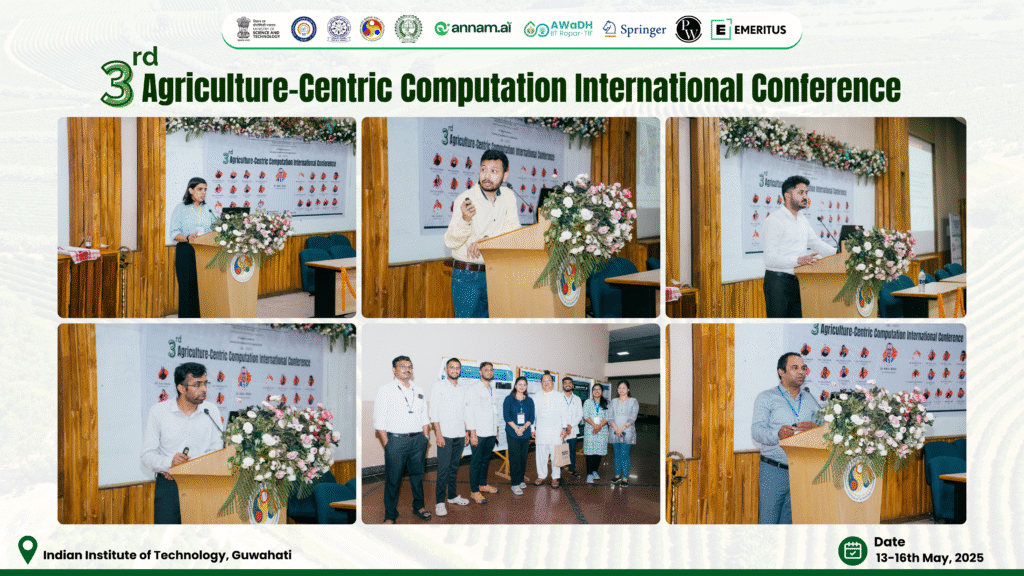
Day 2 was 𝐀𝐝𝐝𝐫𝐞𝐬𝐬ed by Prof. Dhananjay Singh (Penn State University, USA) provided valuable insights into smart systems and next-gen agri-tech solutions.
Then there was 𝐂𝐎𝐌𝐏𝐀𝐆 Workshop by Prof. Tomás Norton (KU Leuven, Belgium) and 𝐒. 𝐒𝐫𝐞𝐞 𝐑𝐚𝐧𝐣𝐚𝐧𝐢 (Elsevier) delved into #computational #tools for #precision #agriculture and academic publishing perspectives.
The 𝐏𝐚𝐩𝐞𝐫 𝐏𝐫𝐞𝐬𝐞𝐧𝐭𝐚𝐭𝐢𝐨𝐧 𝐒𝐞𝐬𝐬𝐢𝐨𝐧 on 𝐌𝐮𝐥𝐭𝐢𝐦𝐨𝐝𝐚𝐥 𝐃𝐞𝐞𝐩 𝐋𝐞𝐚𝐫𝐧𝐢𝐧𝐠 𝐢𝐧 𝐀𝐠𝐫𝐢𝐜𝐮𝐥𝐭𝐮𝐫𝐞 was Chaired by 𝐃𝐫. 𝐃𝐚𝐯𝐢𝐝 𝐓𝐥𝐚𝐢𝐬𝐮𝐧 𝐓𝐡𝐚𝐰𝐦𝐭𝐡𝐚𝐧𝐠𝐚 (Central Agricultural University, Imphal) covered research on:
PolSAR data with CNNs for crop classification, Conv-LSTM models for cattle vocal stress detection, Leaf anomaly detection systems, Behavior prediction in livestock using multimodal inputs, Deep learning in mango disease detection, LLM enhancements for agriculture-specific translation tasks
The 𝐏𝐚𝐩𝐞𝐫 𝐏𝐫𝐞𝐬𝐞𝐧𝐭𝐚𝐭𝐢𝐨𝐧 𝐒𝐞𝐬𝐬𝐢𝐨𝐧 on 𝐆𝐈𝐒 𝐚𝐧𝐝 𝐌𝐮𝐥𝐭𝐢𝐬𝐩𝐞𝐜𝐭𝐫𝐚𝐥 𝐀𝐩𝐩𝐥𝐢𝐜𝐚𝐭𝐢𝐨𝐧𝐬 𝐢𝐧 𝐀𝐠𝐫𝐢𝐜𝐮𝐥𝐭𝐮𝐫𝐞 was Chaired by Dr. Mukesh K. Saini (Indian Institute of Technology, Ropar), featured work on:
Terrain suitability analysis using VR, Soil sodium ion sensing, Biomass utilization for climate change mitigation, GIS-based precision farming in Punjab, Smart Agri Rovers, Non-invasive tea quality testing via NIR spectroscopy.
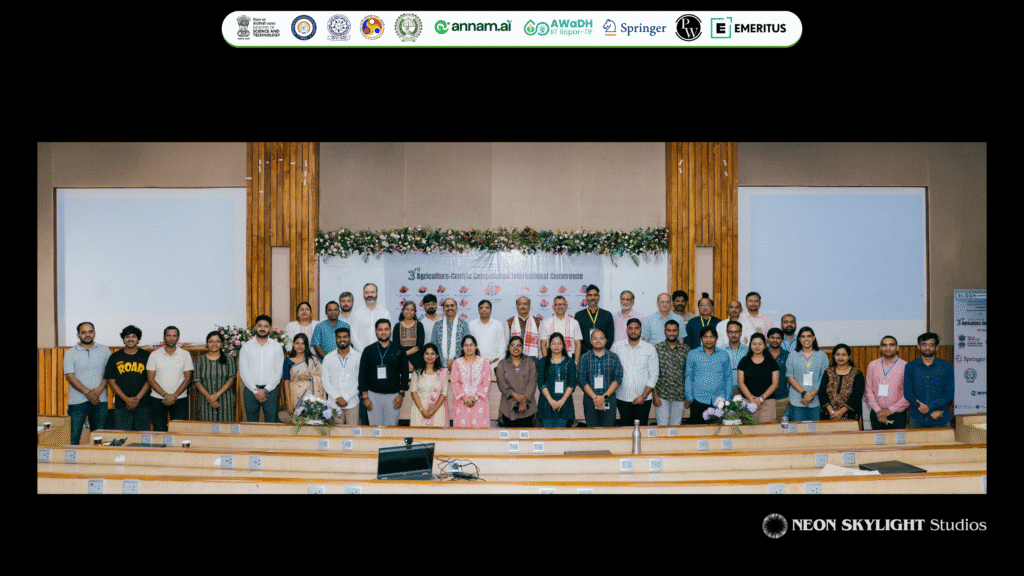
The day began with an insightful talk by 𝐃𝐫. 𝐒𝐮𝐝𝐢𝐩 𝐌𝐢𝐭𝐫𝐚 (Indian Institute of Technology, Guwahati), who highlighted the importance of ecological balance, climate resilience, and computational modeling in 𝐬𝐡𝐚𝐩𝐢𝐧𝐠 𝐬𝐮𝐬𝐭𝐚𝐢𝐧𝐚𝐛𝐥𝐞 𝐚𝐠𝐫𝐢𝐜𝐮𝐥𝐭𝐮𝐫𝐚𝐥 𝐬𝐲𝐬𝐭𝐞𝐦𝐬.
The 𝐓𝐞𝐜𝐡𝐧𝐢𝐜𝐚𝐥 𝐒𝐞𝐬𝐬𝐢𝐨𝐧 𝐨𝐧 𝐀𝐝𝐯𝐚𝐧𝐜𝐞𝐝 AI for Agriculture, chaired by Dr. Andrew Roobert A (IIT Guwahati), this session spotlighted cutting-edge research in AI and quantum computing:
🔹 Akhil Madhamshetty (University of North Carolina at Charlotte) – Cyber-Physical System for Agrometeorological Data
🔹 Shashi Bhushan Kumar et al. (Indian Institute of Technology, Kharagpur) – DSSAT vs APSIM Crop Modeling
🔹 Tamilarasi K et al. (VIT Chennai) – Quantum Reinforcement Learning for Seed Treatment
The conference closed with the 𝐑𝐨𝐚𝐝 𝐭𝐨 𝐂𝐨𝐥𝐥𝐚𝐛𝐨𝐫𝐚𝐭𝐢𝐨𝐧 (RTC) initiative, setting the stage for future academic-industry linkages, global research networks, and collaborative innovation in agriculture-centric computation.
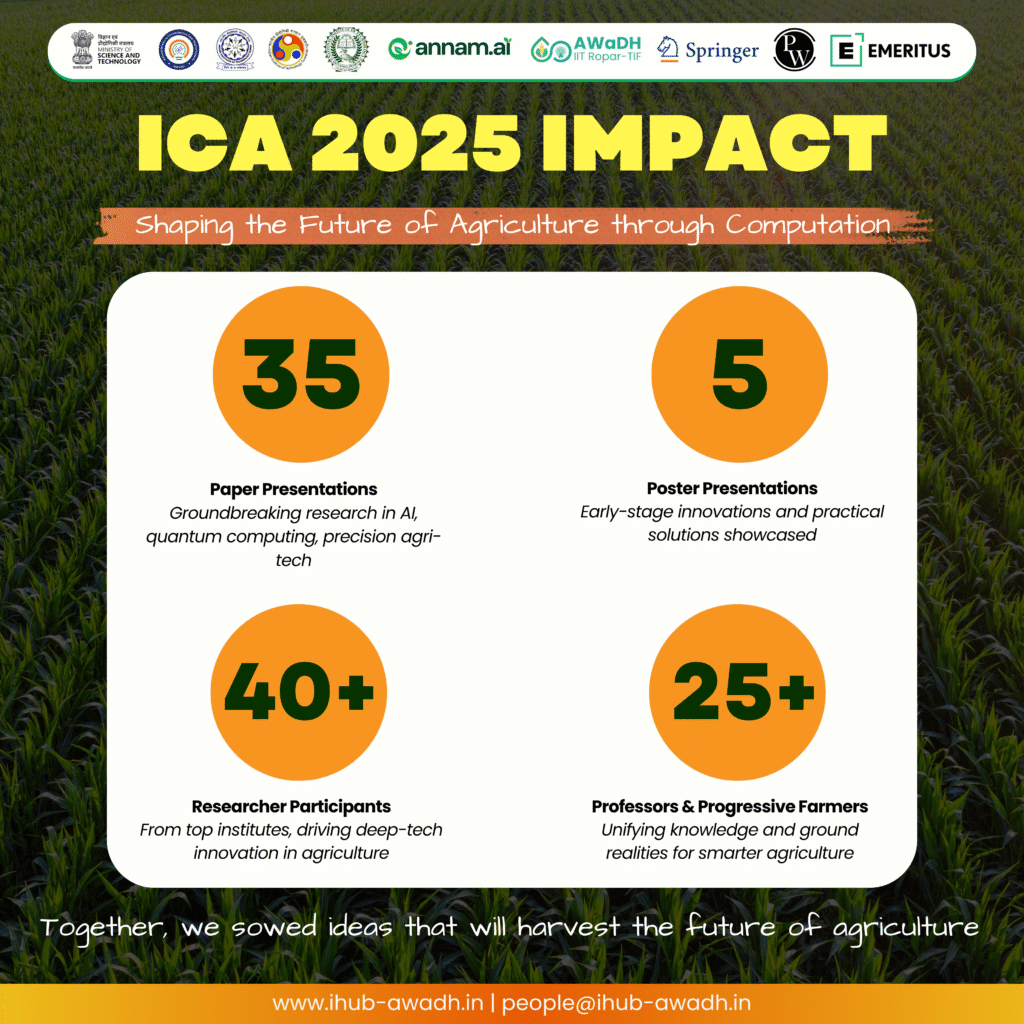
As we reflect on three powerful days of learning, research, and collaboration at Indian Institute of Technology, Guwahati, the impact of ICA2025 — organized with iHub – AWaDH @ IIT Ropar, Indian Institute of Technology, Ropar, NIT Arunachal Pradesh Official, and ANNAM.AI—stands as a testament to the strength of interdisciplinary innovation in 𝐚𝐠𝐫𝐢𝐜𝐮𝐥𝐭𝐮𝐫𝐞-𝐜𝐞𝐧𝐭𝐫𝐢𝐜 𝐜𝐨𝐦𝐩𝐮𝐭𝐚𝐭𝐢𝐨𝐧.
𝐊𝐞𝐲 𝐎𝐮𝐭𝐜𝐨𝐦𝐞𝐬:
35 𝐏𝐚𝐩𝐞𝐫 𝐏𝐫𝐞𝐬𝐞𝐧𝐭𝐚𝐭𝐢𝐨𝐧𝐬:– Showcasing pioneering research in precision farming, AI, climate modeling, quantum computing, and more.
5 𝐏𝐨𝐬𝐭𝐞𝐫 𝐏𝐫𝐞𝐬𝐞𝐧𝐭𝐚𝐭𝐢𝐨𝐧𝐬 – Highlighting early-stage concepts and practical demonstrations of tech-led agri-solutions.
40+ 𝐑𝐞𝐬𝐞𝐚𝐫𝐜𝐡𝐞𝐫 𝐏𝐚𝐫𝐭𝐢𝐜𝐢𝐩𝐚𝐧𝐭𝐬 – Advancing deep-tech innovation from leading institutions and global universities.
25 𝐏𝐫𝐨𝐟𝐞𝐬𝐬𝐨𝐫𝐬 & 𝐏𝐫𝐨𝐠𝐫𝐞𝐬𝐬𝐢𝐯𝐞 𝐅𝐚𝐫𝐦𝐞𝐫𝐬 – Connecting cutting-edge research with ground realities to enable real-world transformation.
This convergence of academia, industry, and grassroots stakeholders reinforces the core mission of ICA—to foster a smarter, sustainable, and tech-driven agricultural ecosystem.